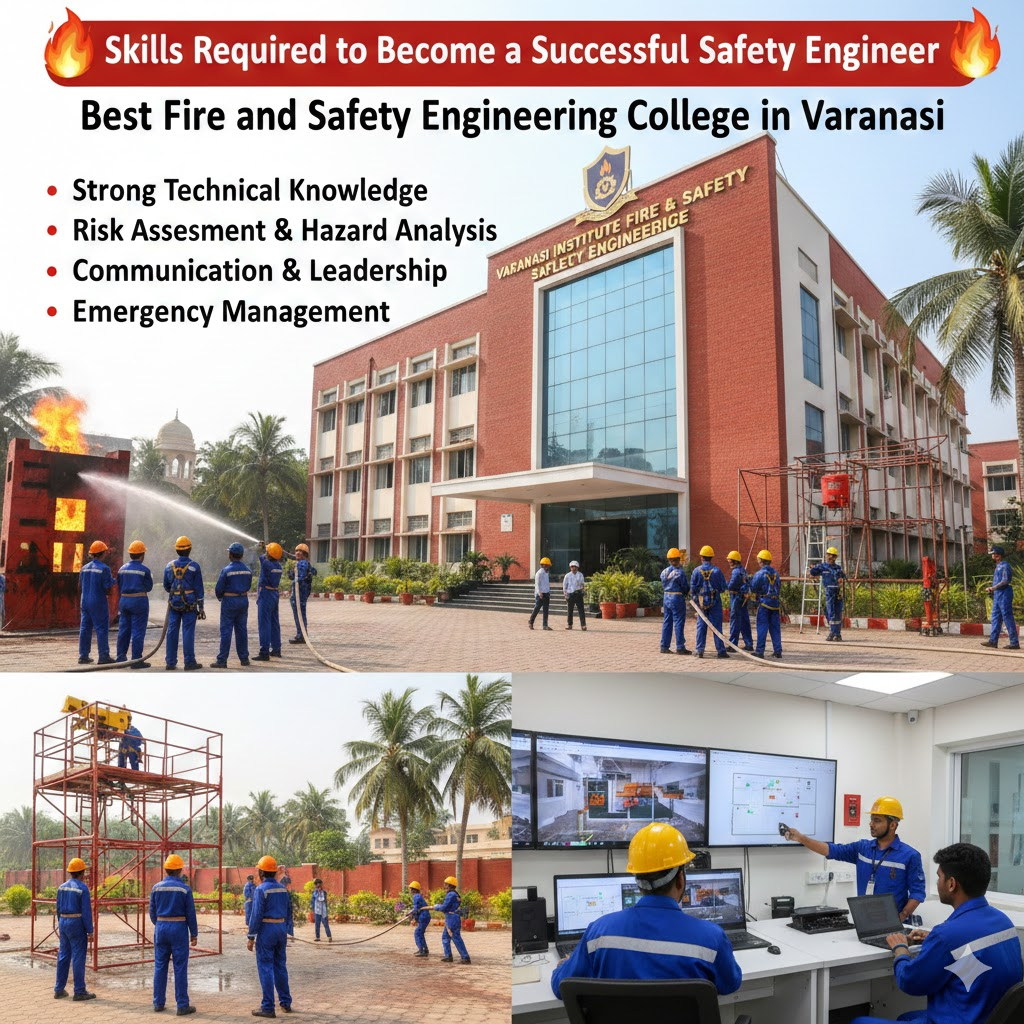
🔥 Skills Required to Become a Successful Safety Engineer | Best Fire and Safety Engineering College in Varanasi
In today’s rapidly growing industrial and infrastructure sectors, the role of a Safety Engineer has become more critical than ever. From construction sites and manufacturing plants to hospitals and commercial complexes, every organization needs skilled professionals who can prevent accidents, manage risks, and ensure workplace safety.
If you aspire to build a career in this field, developing the right skills is essential. Enrolling in the best Fire and Safety Engineering College in Varanasi can provide the technical knowledge and practical training needed to become a successful Safety Engineer.
🧠 1. Strong Technical Knowledge
A successful Safety Engineer must have in-depth knowledge of:
- Fire protection systems
- Industrial safety standards
- Hazard identification techniques
- Risk assessment procedures
- Occupational health regulations
- Safety equipment and PPE usage
Technical expertise forms the backbone of safety engineering. Studying at the best Fire and Safety Engineering College in Varanasi helps students gain structured theoretical and practical understanding of these core subjects.
🔎 2. Risk Assessment & Hazard Analysis Skills
One of the primary responsibilities of a Safety Engineer is identifying potential hazards before they cause harm. This requires:
- Analytical thinking
- Attention to detail
- Understanding of workplace processes
- Ability to conduct safety audits
Professionals trained at the best Fire and Safety Engineering College in Varanasi are taught how to evaluate workplace risks and implement preventive measures effectively.
📋 3. Knowledge of Safety Laws & Regulations
Safety Engineers must be familiar with national and international safety regulations such as:
- National Building Code (NBC)
- Factory Act & Industrial Safety Rules
- Environmental safety standards
- Fire prevention and protection guidelines
Understanding compliance requirements ensures organizations avoid legal issues and penalties. Quality education from the best Fire and Safety Engineering College in Varanasi provides updated knowledge of these regulations.
🗣️ 4. Communication & Leadership Skills
A Safety Engineer must:
- Conduct safety training sessions
- Guide workers on emergency procedures
- Coordinate with management and government officials
- Lead evacuation and emergency response drills
Strong communication and leadership abilities are essential for enforcing safety culture within an organization. Practical exposure offered by the best Fire and Safety Engineering College in Varanasi helps students develop these soft skills.
🚨 5. Emergency Management & Decision-Making Ability
During emergencies such as fire outbreaks, chemical leaks, or industrial accidents, quick decision-making can save lives. A successful Safety Engineer should be able to:
- Stay calm under pressure
- Execute evacuation plans
- Coordinate rescue operations
- Minimize property damage
Hands-on training provided by the best Fire and Safety Engineering College in Varanasi prepares students to handle real-world emergency situations confidently.
💻 6. Technical & Digital Proficiency
Modern safety engineering now includes the use of:
- Safety management software
- Monitoring systems
- Fire detection technology
- Surveillance and alarm systems
Familiarity with modern tools enhances efficiency and effectiveness. A well-structured curriculum at the best Fire and Safety Engineering College in Varanasi ensures students stay updated with technological advancements.
📊 7. Problem-Solving & Analytical Thinking
Safety Engineers often encounter complex safety challenges. They must:
- Analyze accident reports
- Investigate root causes
- Design preventive strategies
- Continuously improve safety systems
Problem-solving skills are crucial for reducing workplace incidents and improving operational safety standards.
🌍 8. Adaptability & Continuous Learning
Safety standards and technologies are constantly evolving. A successful Safety Engineer must:
- Stay updated with new regulations
- Attend workshops and certifications
- Upgrade technical knowledge regularly
Students trained at the best Fire and Safety Engineering College in Varanasi gain a strong foundation that supports lifelong learning and career growth.
🎓 Why Choose the Best Fire and Safety Engineering College in Varanasi?
Choosing the right institute plays a major role in shaping your career. The best Fire and Safety Engineering College in Varanasi offers:
- Industry-oriented curriculum
- Practical lab training
- Experienced faculty
- Placement assistance
- Internship opportunities
- Modern safety equipment exposure
With proper training and skill development, graduates can pursue careers as:
- Safety Engineer
- Fire Protection Engineer
- Safety Officer
- Risk Assessment Specialist
- Industrial Safety Manager
📌 Conclusion
Becoming a successful Safety Engineer requires a combination of technical expertise, analytical ability, leadership skills, and practical experience. As industries continue to grow, the demand for qualified Safety Engineers is rising steadily.
To build a strong foundation and develop essential professional skills, enrolling in the best Fire and Safety Engineering College in Varanasi can be your first step toward a rewarding and secure career in safety engineering.
